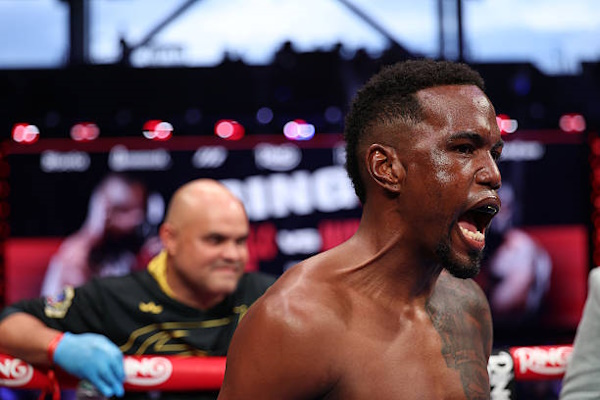
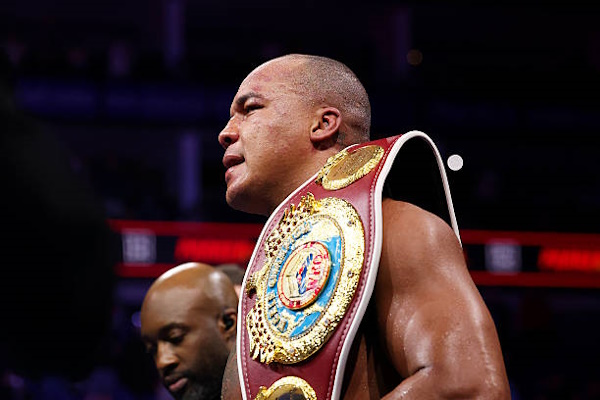
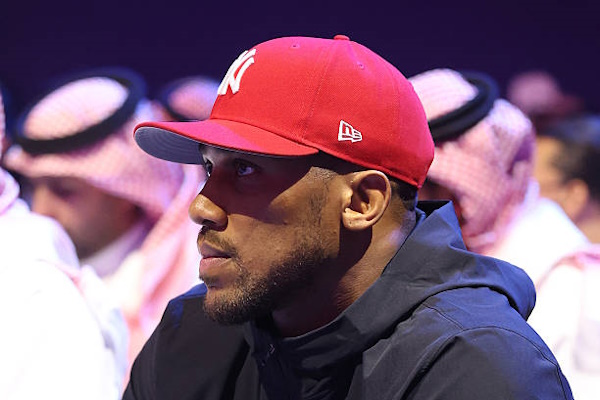
Bare-knuckle boxing is one of the newest and most recognizable players in combat sports but it leaves much to be desired when it comes to legitimacy with the competition being only a single death or serious injury away from destroying all it’s built.
As the name of the sport implies, its focus is strictly on bare-knuckle boxing, which allow clinchings ― as in MMA ― and omits the protectiveness of boxing gloves in favor of merely fighting with hand wraps.
And that is quickly proving to be the detriment of competing fighters.
In this niche, Bare Knuckle Fighting Championship (BKFC) has already distinguished itself as a destination for former pro boxers and MMA competitors, but more competition appears to be arriving with another promotion in Bare Knuckle Boxing (BKB) having stirred some controversy over the past week.
Competing in his second bare-knuckle boxing match and his first at BKB, retired American pro boxer Paulie Malignaggi looked mauled despite a split-decision victory over British former middleweight (160 lbs) contender Tyler Goodjohn.
As captured in a video released on social media, Malignaggi’s face bore the gruesome marks of a man that looked like he had been hit by a truck after going 5 rounds [3 minutes per round] with Goodjohn but maintained he was well in his video:
Malignaggi made sure his fans knew he was okay after his Saturday's bare knuckle boxing win 👍 pic.twitter.com/Xqhhn1QlJe
— All the Smoke Boxing (@atsboxing) October 20, 2025
Treated in in a hospital in Leeds, Yorkshire ― the same place where BKB’s event was held, Malignaggi went on to summarize the damage he suffered during his fight with Goodjohn that kept him in the hospital for hours:
“I just wanna give everybody a thanks for all your well wishes,” said Malignaggi.
“I’m fine. I’m still in Leeds General Hospital. This is crazy, by the way. I don’t know how it works in the UK, [but] I still have not been stitched up. It’s 4:30 in the morning. I got here 10 ‘o clock. Still have not been stitched up.
“They X-rayed me, didn’t give me the results of my hands. They gave me a CAT-scan; I’ve got broken ribs in the back from all the rabbit punches and the kidney punches. Kid [Goodjohn] broke my ribs with the kidney punches ― my lower rib on my left side. And my eyes are too foggy still. When they put the really bright light, it’s too foggy for them to tell the extent of the damage.“
The injuries suffered by Malignaggi, which includes a broken rib, were all sustained during his BKB fight against Tyler Goodjohn on October 18th and continues on a disturbing trend of bare-knuckle competitors ending up heavily injured, win or lose.
In 2021, the BKFC received steep criticism for its lack of safety procedures following the death of fighter Justin Thornton after competing on the undercard of BKFC 20, with the Association of Boxing Commissions and Combative Sports (ABC) ― based in the US ― having counseled extreme caution when it comes to bare-knuckle fights in general due to the limited risks when it comes to medical data.
The Guardian’s Joseph Palmer went on to claim the sport was “less harmful for the brain than its gloved counterpart” in a 2024 article, based on studies that confirmed punches with boxing gloves cause more of a concussive force than with hand wraps.
However, bare-knuckle boxing still counts as a clearly dangerous sport, with the injuries Malignaggi sustained not only recently but during his BKFC debut against Artem Lobov in 2019 signifying there is physical damage received and dished out that can turn out to be fatal, as in the case of Justin Thornton.
In countries outside the USA and UK, there is more scrutiny the sport with Western Australia’s Combat Sports Commission having rejected a bare-knuckle event within Australia earlier this year due to the dangers involved.
While there might be less concussions in bare-knuckle boxing than in professional boxing, it doesn’t negate the fact that serious physical injuries are still a regular part of the sport. Few competitors are left undamaged, fewer are left unscarred and it is altogether accepted that fighters competing in bare-knuckle boxing will not leave the ring unscathed.
Whether the combat sport can be sustained in the long-term is dependent on how serious the injuries become. As with every combat sport, a potential demise or lifechanging injury seems just a fight away and one of those has already occurred.
Will the next injury or death only then spur bare-knuckle promotions to change the rules or equipment in order to ensure a safer sport?
Let us hope we will never find out.