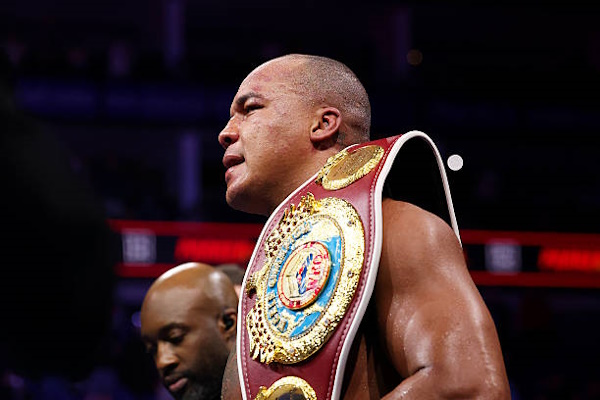
In the world of boxing, there appears to be much less stigma attached to the use of performance-enhancing drugs (PEDs) than recreational as Joseph Parker currently faces a two-year ban for the use of Cocaine according to The Sun.
Based on a drug test that was conducted on October 25th, the same day that Parker (36-4, 24 KO’s) fought and lost to Fabio Wardley (20-0-1, 19 KO’s), the New Zealand fighter’s A-sample came back positive with an adverse finding for Cocaine after a Voluntary Anti-Doping Association (VADA) test.
Cocaine, an illegal drug in nearly every country, is not considered a PED according to the World Anti-Doping Agency (WADA) and there is an opportunity for Parker to plead his innocence by having the B-sample tested. In most circumstances, the use of illicit substanes such as Cocaine or Cannabis does not immediately result in a strict ban if the athlete can prove they used the substance outside of competition and not for athletic performance.
However, in case of fighters using such substances at least a day before a fight, this would count as an anti-doping rule violation, making Parker ineligible to receive a reduced sentence.
Parker’s decision to include his family in his training camp places some doubts on his alleged use of cocaine, though the test does prove damning given it was held on the same day as his fight with Wardley ― suggesting the substance was intentionally or unintentionally ingested during fight week.
The use of cocaine could result in a two-year ban for the heavyweight (200+lbs) as the British Boxing Board of Control (BBBofC) ― who regulated the Parker-Wardley fight ― strongly follows the anti-doping guidelines set by WADA through UK Anti-Doping (UKAD), starkly contrasting with sentences imposed on fighters outside the UK, especially from the US, who only receive a one-year ban for the use of PEDs.
With Joseph Parker potentially facing this lengthy ban, it further draws questions as to the steep sentences imposed by WADA for drugs deemed recreational despite it counting as an anti-doping violation.
The case also highlights the lack of adherence by state athletic commissions from the United States to WADA’s rules given athletes rarely receive two-year sentences, as became evident during Ryan Garcia’s infamous one-year suspension for the use of Ostarine.
Further compounding the potentially strict sentence Parker can receive is the fact UKAD had attempted to ban a deceased boxer for four years for using the same substance of Cocaine while repeated offenders such as American heavyweight Jarrell Miller were not even held to full account after the use of several performance-enhancing drugs.